

Wellness
Move. Breathe. Reflect. Return.
Explore practices that support your well-being and discover what feels meaningful to you.
Consistency doesn’t mean doing the same thing every day. Some days, that may look like movement. Other days, it may be a few intentional breaths, quiet reflection, or simply slowing down. What supports you today may be different from what supports you a year from now.
Keep what resonates. Leave what doesn’t. Create a practice that feels authentic to you.
The information provided in this wellness library is for educational and informational purposes only and is not intended as, and should not be relied upon as, medical advice, diagnosis, or treatment and is not a substitute for individualized medical care from a qualified healthcare professional.
Participation in any movement, breathing, meditation, or well practice is voluntary. Always practice within your own comfort level and abilities, and discontinue any activity that causes pain, dizziness, shortness of breath, or other concerning symptoms. If you have questions about your health, a medical condition, or whether a particular practice is appropriate for you, please consult your healthcare professional. Viewing this content does not establish a patient-provider relationship.
Movement
Movement can take many forms. It might be yoga, a walk outside, stretching between meetings, strength training, playing your favorite sport, dancing in your kitchen, or simply moving your body with intention.
Every practice begins with the same invitation: to reconnect with yourself
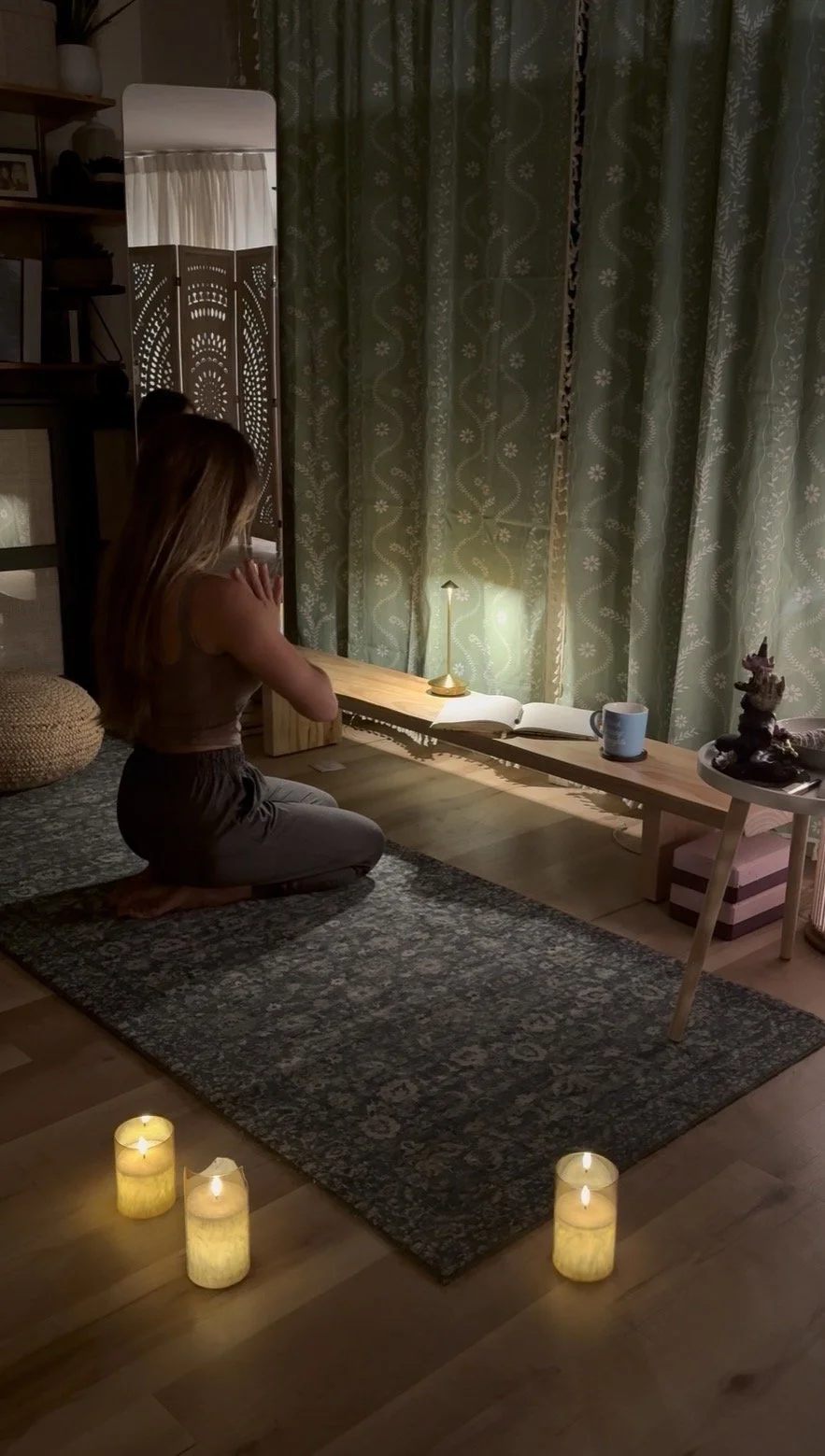
Yoga Library
The Yoga Library includes a growing collection of individual poses and guided yoga flows designed to support strength, mobility, balance, relaxation, and greater awareness of the body. Explore the practices below and discover what supports you.
Before beginning a guided flow, settle into your space and come to your mat ready to move. Wear something comfortable and give yourself room to slow down and reconnect with your body.
If you enjoy practicing with music, feel free to play something softly in the background. Lo-fi, jazz, instrumental music, or anything that helps you relax can work beautifully. Keep the volume low enough that you can comfortably hear the guided practice.
Each flow ends with an opportunity for guided relaxation or meditation. I’ll let you know when it’s time to pause your music if you’d like to follow along, or you’re always welcome to use that time for your own meditation practice or simply rest in stillness.
Guided Flows
Grounding Poses
-
![]()
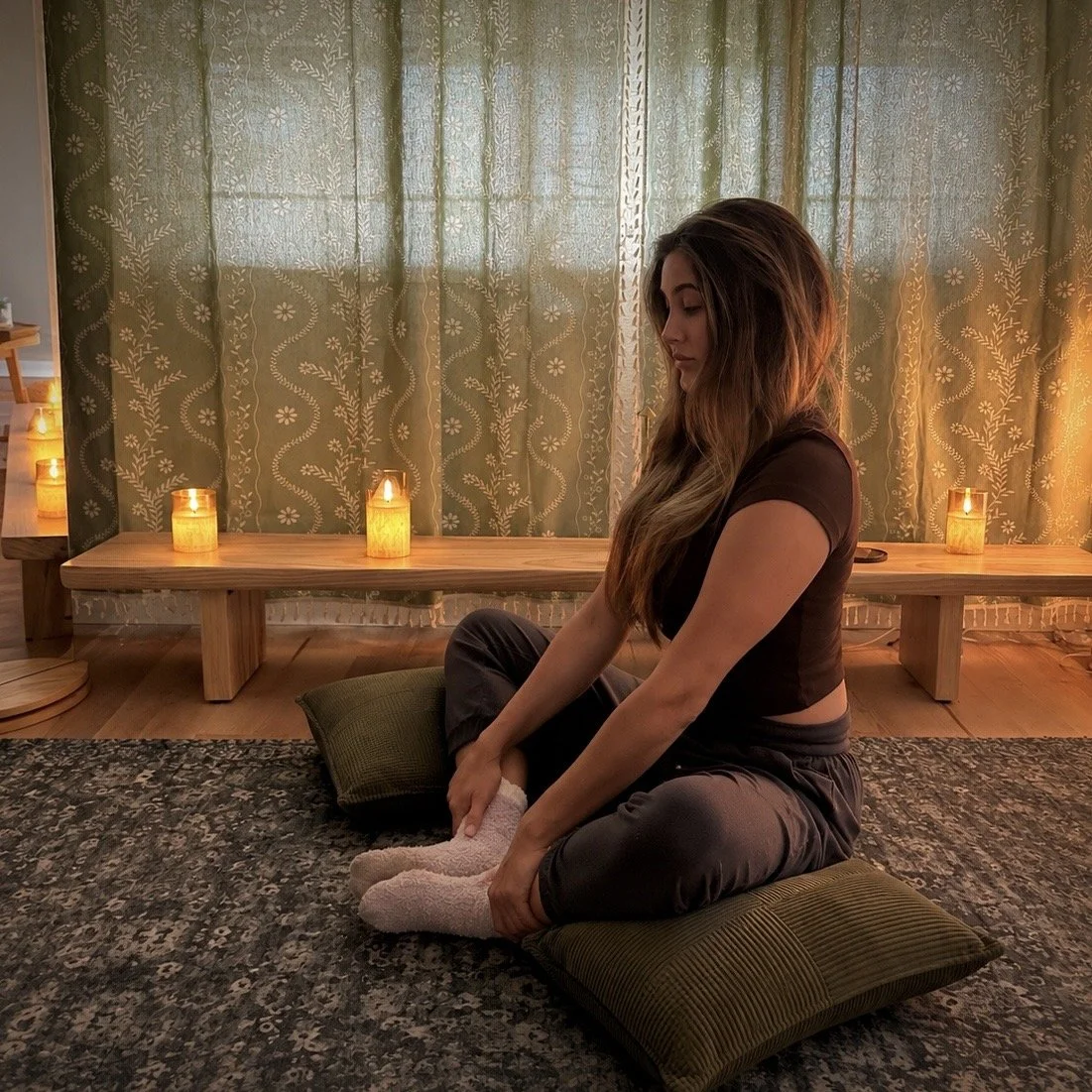
Supportede Butterfly
Supta Baddha Konasana
A restorative hip- and heart -opening posture that invites the body to soften. Pillows beneath the knees provide support, allowing the hips to relax comfortably without forcing the stretch. -
![]()
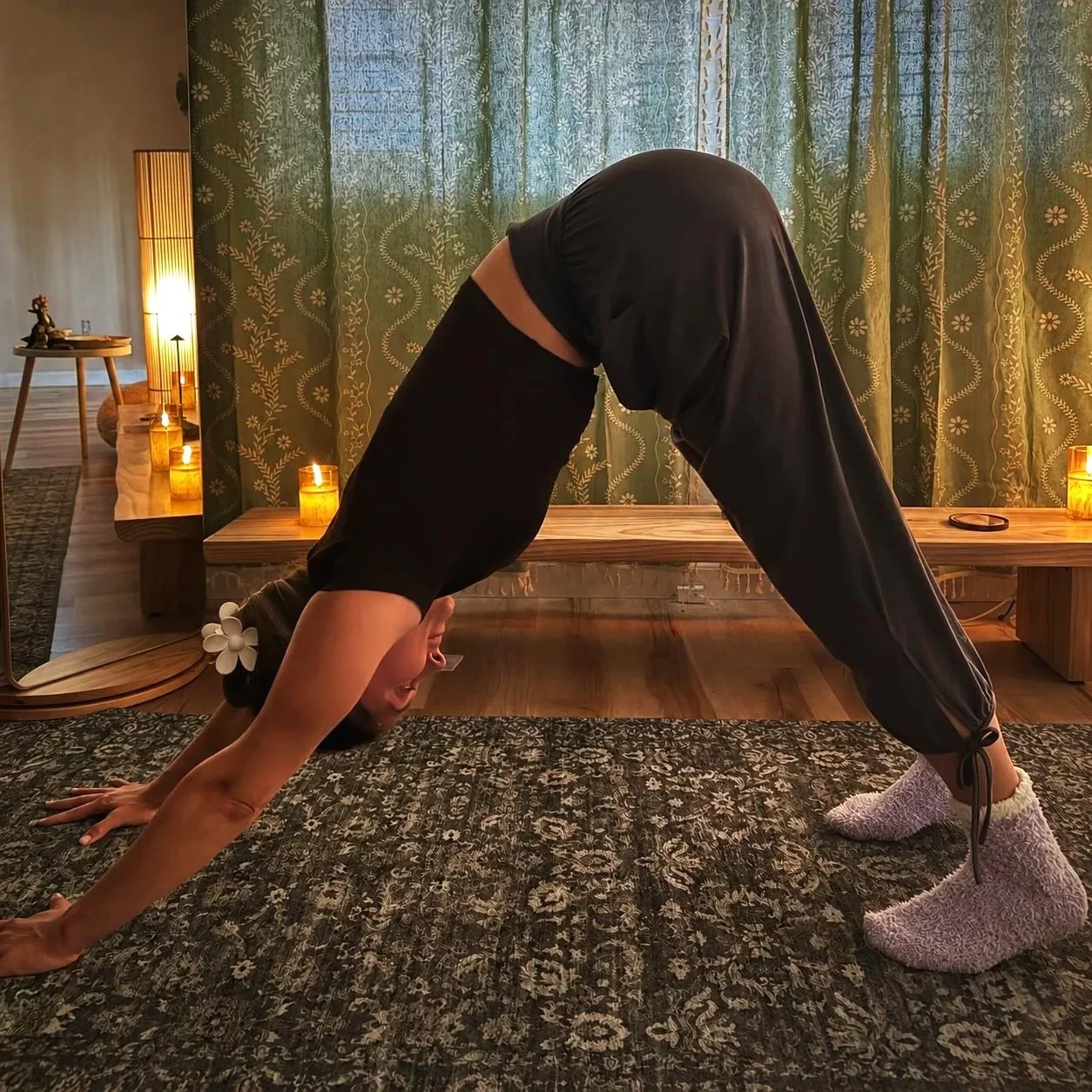
Downward Dog
Adho Mukha Svanasana
An energizing and grounding posture that lengthens the spine while building strength throughout the body. You may chose this pose to gently awaken the body, create space through the back of the body, and reconnect with your breath. The knees may remain bent and the heels lifted to priortize a long comfortable spine. -
![]()
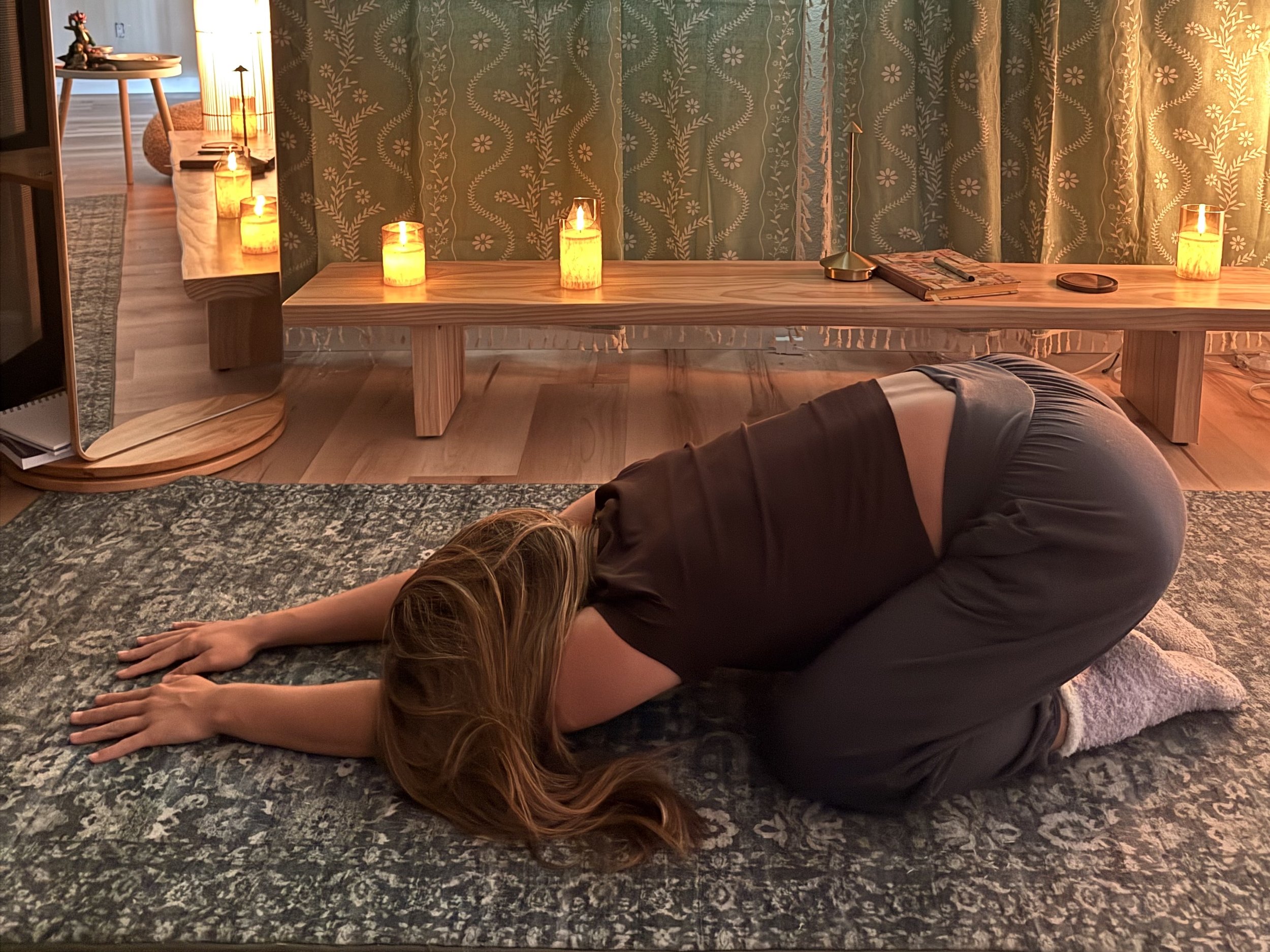
Child's Pose
Balasana
A gentle stretch that can ease tension through the back, hips, and shoulders while creating space to slow your breath. You may choose this pose whenever you need a moment of rest, reflection, or calm
-
![]()
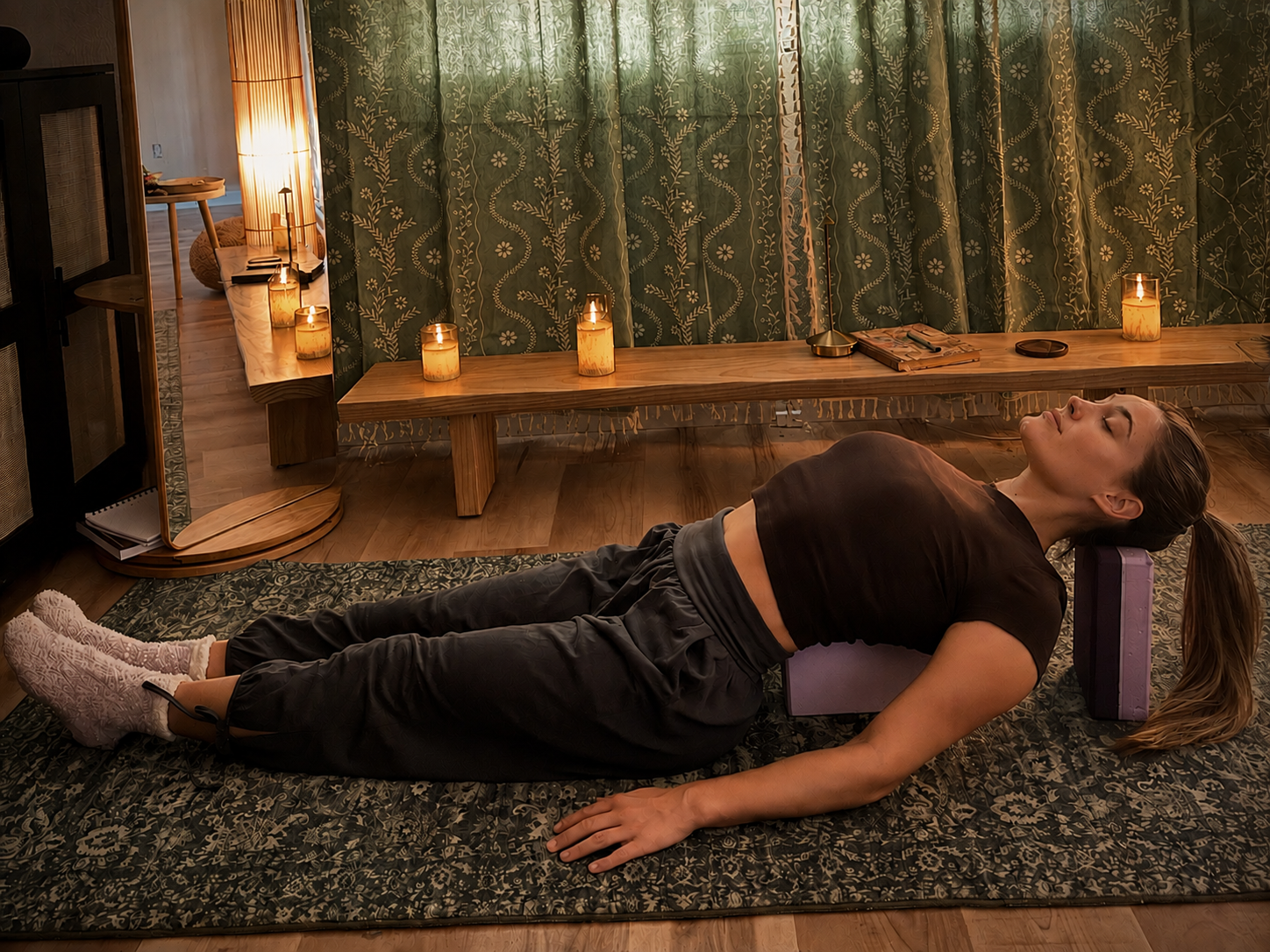
Supported Fish Pose
A supported backbend using two yoga blocks- one supporting the upper back and one supporting the head. This gentle chest opener helps ease tension across the chest, shoulders and back making it a wonderful choice after a day of sitting at a desk, driving, looking down at a phone for much of the day, or when you’re simply looking for a quiet moment to practice slow mindful breathing.
Breath
Our breath is one of the few things we can consciously change in a matter of seconds.
Whether you’re feeling overwhelmed or simply want to reconnect with the present moment, a few intentional breaths can help you slow down and reset.
Explore the practices below, with more guided breathwork coming soon.
-
Diaphragmatic breathing is a foundational breathing practice that encourages gentle expansion through the abdomen and rib cage while bringing awareness to the natural coordination between the diaphragm, pelvic floor, and deep core.
On the inhale, feel the abdomen gently expand and the pelvic floor soften. On the exhale, allow a gentle return.
-
Extended exhale breathing is a calming practice that gently lengthens the exhale relative to the inhale. It can be a helpful tool when you’re feeling stressed or activated, or simply want to slow down and reconnect with the present moment.
Begin with a comfortable breath. Inhale gently through your nose, then allow your exhale to last a little longer than your inhale.
For example, inhale for a count of 4 and exhale for a count of 6. Keep the breath easy and comfortable. There’s no need to force the breath or completely empty your lungs.
🎧 Guided Practice — Coming Soon
-
Box breathing is a structured breathing technique that uses four equal phases of the breath. The predictable rhythm can provide a point of focus and may be helpful when you want to pause, settle your attention, and reset.
Inhale gently through your nose, pause, exhale slowly, then pause again—using the same count for each phase.
For example: inhale for 4, hold for 4, exhale for 4, and hold for 4. Repeat at a comfortable pace, shortening the count if needed.
🎧 Guided Practice — Coming Soon
Meditate
Meditate
Meditation is the practice of cultivating awareness. By observing our experiences rather than becoming caught up in them, we create space to respond with greater intention, clarity, and presence.
You don’t need a perfectly quiet mind to meditate. Begin by bringing your attention to a chosen anchor, such as your breath. As you settle into the present moment, allow yourself to gently turn inward. As thoughts arise, observe them without needing to chase them or push them away. Each time your mind wanders, gently return your attention to your chosen anchor. That return is the practice.
There is no right or wrong way to practice. Consistency matters more than duration. Returning to your practice regularly can help cultivate greater presence, resilience, and a sense of calm.
Listed below are a variety of meditation methods to explore and discover what feels most supportive for you.
Reflect and Restore
In a world that often encourages us to stay busy, yin reminds us that moments of stillness, reflection, and restoration help us reconnect with ourselves, cultivate deeper self-awareness, and create space for growth.
Practicing gratitude gently helps shift our perspective toward the abundance already present in our lives, cultivating joy, appreciation, optimism, and resilience over time.
An intention is a conscious choice about how you want to show up for yourself and those around you. Rather than focusing on what you want to accomplish, it invites you to embody the qualities that will help guide your actions. You might choose one intention for the day, the month, or a season if life, and let it become the mantra you return to throughout your practice and into your day.
Journaling creates space to process our thoughts and emotions, helping us recognize patterns, gain clarity, and deepen our understanding of ourselves. If you’re not sure where to begin, each yoga flow in the library includes an intention and journal prompt in the description to encourage reflection beyond the mat. You’re welcome to use them as they are or as inspiration for whatever feels most meaningful to you.
Through practices of stillness, gratitude, intention, and reflection, we create space to reconnect with ourselves and move through life with greater awareness, clarity, and purpose.
If you’d like to explore how evidence-based medicine and wellness practices can support your health, we’d be honored to care for you. Schedule an appointment with Kaitlyn Crouch, PA-C, or Dr. Rachel Rayburn, DO, for an individualized medical evaluation. Together we’ll discuss your health concerns, answer your questions, and, when appropriate, create a personalized care plan tailored to your unique goals.
The wellness content on this page is provided for general educational purposes only. Individualized medical advice and treatment recommendations are provided only after an appropriate medical evaluation within an established provider-patient relationship.